


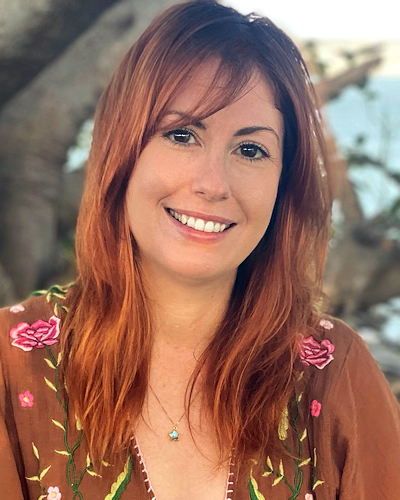
Kristy-Lee Ferry
Somatic Psychotherapist, Process Oriented Therapist
Grounded Space Counselling
Crows Nest, Sydney NSW 2065
In Person + Online Therapy Australia-wide
Philosophy & Vision
My journey into the counselling profession is an accumulation of a lifetime fascination with observing and exploring the human condition. As an integrated counsellor I utilise a holistic approach and tailor each session to the unique presentation of my clients current mental, emotional, and physical needs.
I flexibly and creatively apply theories and techniques from a variety of modalities which I use to support the diverse circumstances and situations that are presented.
This type of experiential therapy looks beyond the confines of a single-schooled approach in order to see what can be learnt from different perspectives.
Background
My passion for self-development has supported me on my journey toward self-connection, compassion, awareness and self-understanding. This has facilitated growth and expansion within my personal and professional life, deepening my connection not only to myself but also to the world around me and continues to hold me in alignment of my deepest truths and authenticity.
I have ‘lived experience’ in many diverse areas of life, which has given me an expanded and open-mind, allowing my clients the freedom to talk honesty and openly about a wide range of subjects without the need to censor or hide their true self. I have vast experience working with those who identify as anything but mainstream, and there are no topics that are ‘off limits.
Services
At Grounded Space an emphasis is placed on safety, trust, empowerment and support. I treat every client as a unique individual with their own set of experiences and circumstances. I work one-on-one to help recognise and facilitate self-awareness, understanding and growth depending on the needs of the client.
I studied Counselling at the Australian Collage of Applied Psychology (ACAP) and Trauma Informed Processwork Psychotherapy (Process Oriented Psychology) at Pathways Psychology Institute. I am also Internal Family Systems (IFS) informed, Somatic Experiencing (SE) informed and Attachment Theory informed.
Quality Provision
I am a Certified Practicing Member of the Psychotherapy and Counselling Federation of Australia (PACFA) and as such, abide by their ethical codes of conduct, practices and informed care. I am also supervised by a qualified supervisor as part of my ongoing commitment to maintaining high practitioner standards as well as continually attending workshops and courses as part of my professional development.
Areas of Interest
Accreditations
- Trauma Inform. Processwork Psychotherapy GradDip. - 2023 - Pathways Psychology Institute
- Somatic Experiencing Certificate (SEP) - 2023 - Somatic Experiencing Australia
- Internal Family Systems Int & Deepening Cert. - 2024 - MInd Beyond Institute
- Counselling Dip. - 2020 - Australian Collage of Applied Psychology
- Authentic Relating - 2021 - Evolve Relating
- Theta Healing Advanced Cert. - 2022 - Co Creation Theta Healing
- Psychotherapy and Counselling Masters - 2025-2027 - Metavision Institute
Modalities
Attachment Theory - Compassion-Focused Therapy - Developmental - Dream Work - Existential - Holistic - Inner Child - Internal Family Systems - Mindfulness - Person Centred - Process Oriented - Somatic Experiencing® - Soul Centred Psychotherapy - Transpersonal - Trauma-Informed
Therapy Approach
My approach to counselling comes from an integration of several therapeutic modalities including, Process Oriented Psychology (Processwork), Somatic Experiencing (SEP), Internal Family Systems (IFS - informed), Transpersonal Psychology and Compassion Therapy.
I utilise a ‘bottom-up’ somatic approach to therapy which means there is an integration of the cognitive (mind) with emotions and sensations within the body. This awareness (beyond the spiralling, often confusion of the mind) gives access to a world of information to help resolve trauma, anxiety, addiction, emotional overwhelm, impulsivity, emotion regulation and an inability to relax and be present.
Professional Associations
- Psychotherapy and Counselling Federation of Australia
Practice Locations
98a Willoughby Rd
Crows Nest NSW 2065
Car - There is 1-2 hour paid parking on Willoughby Road or a Council parking station on Holtermann Street with 2 hours free parking.
Public transport - 10min walk from St Leonards train station or bus stop, out the front on Willoughby Rd.
Appointments
Appointments are available Monday to Friday and some Saturdays during business hours.
I also offer extended times upon request to cater for all situations.
Fees & Insurance
I offer an initial 15min consult to see if I'm the right therapist you.
I don’t currently accept the Mental Health Care Plan however I have kept my prices in line with what you would generally pay in out-of-pocket expenses.
Payment Options
Credit Card . Eftpos . Direct Deposit . Cash
Contact Kristy-Lee
Please contact me to make an appointment
A conversation with Kristy-Lee Ferry
-
Honestly… it came from doing the work on myself.
It was years of trying to understand myself, moving through things that didn’t make sense, and sitting in places that felt really hard to shift.
And alongside that, I kept having this experience where I knew — deep down — that therapy could help… but I couldn’t find the right person.
I saw a lot of therapists who were very by-the-book.
Very structured, very cognitive… almost a bit removed.
And I remember sitting there thinking,
you don’t actually get me…
Not because they weren’t trained — but because it didn’t feel lived.
It didn’t feel like they had been there themselves.
So I ended up going on a pretty deep journey — both internally and externally.
Therapist after therapist, workshop after workshop… really going into the depths of things, not skimming the surface.
And through all of that, something became really clear.
This works. Real change is possible.
But it matters who you’re sitting across from.
And underneath all of that… I knew this is what I’m here to do.
Not from a textbook — but from lived experience, from having actually walked through it.
So I did the training, the study, all of it…
but it was never just about learning techniques.
It was about becoming someone who can truly sit with another person in that space. -
At the core of my work is a deep trust in the person sitting in front of me.
I don’t believe the therapist has all the answers… and I don’t see myself as someone who needs to “fix” anything. I see my role as supporting people to connect to themselves - to bring awareness to what's already there.
A big influence for me has been approaches that centre compassion, curiosity, and self-awareness.
Not judging or trying to get rid of parts of ourselves… but actually turning toward them, understanding them, and integrating them.
I also work a lot with the body.
I deeply trust that the body holds its own kind of intelligence — that it’s always moving toward some form of balance or resolution, even if it doesn’t look like it on the surface. So rather than trying to override that, we learn to listen to it and work with it.
That means we don’t rush to change things or go around what’s there.
We slow down, we stay with it, and we move through it — at a pace that feels safe and workable for the person.
I don’t believe we’re powerless, and I don’t believe change comes from someone outside of us telling us what to do.
I believe people begin to shift when they start to see themselves more clearly — and realise they have more capacity, choice, and agency than they’ve been led to believe. -
I’m really interested in how each person experiences their world… not just what’s happened to them, but how they’ve made sense of it, how it lives in them, and how it shows up in their day to day life.
No two people process things the same way — even if the situation looks similar on the surface. And I find that endlessly interesting… that we’re all human, and yet our inner worlds can be so different.
In terms of the work itself, I’m often drawn to people who have learnt to adapt in ways that once helped them… but are now getting in the way.
That can look like self-abandonment, people-pleasing, shutting down, overthinking, or patterns that have turned into coping strategies or addictions. Often, those patterns have roots in earlier experiences — emotional, physical, or relational wounds — and they made sense at the time.
But over time, they can start to limit how fully someone is able to live.
I’m also really interested in relationships and connection… in all forms.
Not just romantic relationships, but how we relate to ourselves, to others, and to the world around us — because really, there isn’t an area of life that isn’t relational or connected in some way.
A lot of people come to me carrying a fear of themselves… of what’s underneath, of what they might feel, or what it would actually mean to be fully who they are.
So instead, they’ve learnt to manage, to adapt, to stay a step removed from their own experience.
The work becomes creating enough internal stability and safety that they can start to meet themselves more directly.
From there, connection begins to grow — not just with others, but within themselves. And that’s where things start to shift.
-
My work is very present-moment and relational.
I don’t follow a fixed structure or work from worksheets… I’m paying attention to what’s actually happening in the room — what’s being said, what’s not being said, what’s showing up in the body, in the space between us.
I’m actively tracking all of that and working with it as it unfolds.
Because of that, sessions don’t all look the same.
Sometimes we’re talking things through, sometimes we slow right down and bring awareness to what’s happening in the body. There might be moments of insight, but also moments of feeling, noticing, and allowing something to shift at a deeper level.
I often bring in more than just conversation — things like drawing, imagery, movement, or using objects in the room to help make sense of what someone is experiencing.
It’s not just about understanding something mentally… it’s about actually feeling it and allowing the body to have a different experience.
I’m also very engaged in the process.
I’m not sitting back in silence the whole time — I’m present, responsive, and attuned. I might reflect things back, ask questions, or gently bring attention to something that’s happening in the moment.
A big part of the work is creating a space where there’s enough safety for whatever is there to come up and be felt.
That includes the harder parts — the sadness, the fear, the things people would usually rather avoid. We stay with it, in a way that feels supported and workable, so it can actually move through rather than getting stuck.
I also bring in an understanding of the nervous system, and where it’s helpful, practical tools people can take with them outside of sessions.
At the centre of it all is curiosity.
Learning how to turn toward your own experience without judgement… and starting to listen to what your body and system have been trying to show you. -
Honestly… even showing up is progress.
Walking into the room, choosing to sit with yourself, to look at things — that’s already a shift. And often, even after the first session, people notice something is different. Maybe not always something they can put into words… but something in their experience has moved.
I’ve also seen people have really significant shifts quite quickly — even after one session.
That’s not always how it works, but it does happen when something lands at the right time.
It’s not always big or obvious.
Sometimes it’s a felt shift — like something drops in.
A moment of clarity, or an “aha”… or just a sense that something that used to feel tight or overwhelming has a bit more space around it.
Often it’s the first time their system has felt safe enough to actually feel something… and that in itself can be significant.
What changes first isn’t the same for everyone.
Sometimes it’s awareness.
Sometimes it’s in the body.
Sometimes it’s in how someone responds to something that would have previously triggered them.
And one of the biggest shifts is when someone starts to notice that space…
that pause between what happens and how they respond.
That moment where they realise — I actually have a choice here.
That’s where a lot of empowerment comes in.
A lot of people also notice that they feel safe enough to be more of themselves in the room… even when what’s coming up is uncomfortable or unfamiliar.
And over time, you start to notice it in your life.
You respond differently where you wouldn’t have before.
-
It’s changed everything.
The biggest shift has been in my relationship with myself.
I have a sense of internal stability now — an anchor that I didn’t have before.
A connection to myself and my body that feels steady, rather than something I have to constantly search for.
There was a time where being in my body felt overwhelming… so I spent a lot of time disconnected from it.
Now, I can stay with myself in a way that feels safe.
That’s probably the biggest difference.
I’m able to notice what’s happening inside me — sensations, emotions, reactions — without being completely taken over by them.
There’s more space.
Where I used to react quickly or intensely, there’s now a pause… and with that, a choice in how I respond.
I don’t rely on the outside world in the same way I used to for validation or a sense of safety.
And if I do notice that pattern coming in, I can see it, understand it, and work with it — rather than getting caught in it.
I also have access now to things that didn’t feel possible before.
Real joy.
A sense of peace.
Connection — both with myself and with other people.
And a capacity to be more of who I am, without it feeling unsafe to do so.
It’s not that life is perfect… but it’s very different.
There’s a steadiness now that wasn’t there before.
That steadiness is what allows me to sit with whatever someone brings into the room.
Not needing to fix it, judge it, or turn away from it… just being with it, as it is — and responding to what’s needed in that moment. -
I really love being able to offer a space where someone can just be… without feeling judged, analysed, or like there’s something wrong with them.
That alone is actually quite rare.
The moments that stay with me are when something shifts for someone — sometimes it’s big and sometimes it’s small, but in a big way…
When they connect to themselves in a way they haven’t before…
or realise they can stay with something that used to overwhelm them…
or notice they have the ability to regulate themselves rather than feeling completely at the mercy of what’s happening inside them.
Those moments are deeply important to me.
I also love when people come back and say they’ve done something they didn’t think was possible for them — whether that’s setting a boundary, speaking honestly, or just not reacting in the way they usually would.
There’s also something really grounding about knowing that what I’ve lived through, and the work I’ve done on myself, can actually support someone else in a meaningful way.
And honestly… I just enjoy all the messy human side of it.
No two sessions are ever the same. No two people are the same.
There’s always something real happening in the room — and I don’t take that for granted.
I feel a lot of gratitude to be able to do this work and offer what I do. -
Aww Yes… of course I do!
But I’m very mindful about how I show up to sessions.
I don’t push through or overextend myself — my commitment is to only work from a place where I can be present, grounded, and actually with the person in front of me.
So if I’m having an off day, I’ll reschedule.
That’s part of how seriously I take the work.
Outside of that, I meet myself the same way I would invite a client to.
With a lot of awareness, kindness, and honesty.
If I notice I’m pushing, overthinking, or that inner critic getting louder… I pay attention to that rather than overriding it.
For me, it’s less about avoiding bad days… and more about how I respond to them. -
For me, it comes back to disconnection.
Disconnection from ourselves… from each other… and from the world around us.
When people are disconnected from themselves, they lose that internal reference point.
They start looking outside of themselves for answers, for validation, for a sense of safety or direction.
And that often comes with fear — trying to get it right, trying to be enough, comparing, adjusting, and moving further away from what’s actually true for them.
I see that play out in so many different ways, but underneath it, it’s often the same thing.
People have learnt to adapt in order to cope, and those adaptations can take them quite far from who they are and what they feel.
So for me, a big part of the work — both individually and more broadly — is about reconnecting.
Coming back into relationship with yourself, with others, and with life in a way that feels more real and grounded. -
The Invitation by Oriah Mountain Dreamer — both the poem and the book.
I first read it in my early twenties, and it landed deeply straight away.
It felt like recognition.
Like yes… this is me.
The depth, the beauty, the sadness, the willingness to really live — it all felt familiar.
And the way it’s written is a big part of that.
The words, the way they’re woven together, the way it captures something so real and human… it’s powerful.
It’s something I still come back to.
I actually have it framed in my therapy room — a piece that was made for me — which feels really special.