


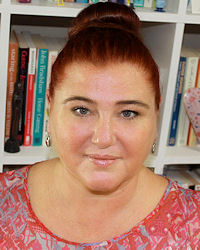
Philosophy & Vision
Therapy is not just a place to heal our deep wounds and trauma but a creative and sacred space where we tend to, and take care of, the soul. In therapy with me, we work to (re) discover your whole self: body, feelings, mind, and soul.
Many of the women I work with are struggling with emotional eating, body image concerns, or a deep sense of not being good enough. Together, we look beyond symptoms to understand what these patterns are trying to express, including unmet needs, attachment wounds, and the impact of earlier experiences.
My approach is trauma-informed, relational, and depth-oriented. I draw on parts work, somatic awareness, and psychospiritual perspectives to support integration and lasting change.
This is a space to be met with compassion, to make sense of your inner world, and to begin to feel more at home within yourself.
Background
Please visit my website to read more about my personal and professional experience in the field of psychology. I have experience working with the following concerns:
Addiction
Anger, anxiety or depression
Grief and loss
Eating and body image issues
Finding value, meaning and purpose in life
Infertility and adoption
Life crisis
Loss of self
Mother-daughter relationships
Relationships and family issues
Self-esteem/worth/confidence
Trauma or abuse from your history
Women's health and well-being
Spiritual awakening / crisis & post traumatic growth
Services
I am a leading specialist in women's emotional, psychological and spiritual health and well-being with 20+ years of experience in the field of psychology.
I provide soul-centred psychotherapy + eating psychology for women as well as run workshops in Manly, Allambie Heights & Frenchs Forest on the Northern Beaches of Sydney.
Follow me @:
https://www.instagram.com/jodie.gale/
https://www.facebook.com/traumawarriors.online
Quality Provision
I work in accordance with PACFA and ARCAP's Code of Ethics.
I receive monthly supervision for all my client work and regularly participate in post graduate training and self development workshops.
I have significantly journeyed my own individual, couples and group therapy.
Areas of Interest
Accreditations
- Masters in Psychosynthesis Psychotherapy - 2008 - Middlesex
- Diploma in Psychotherapy - 2008 - Institute of Psychosynthesis
- Diploma in Therapeutic Counselling - 2005 - Institute of Psychosynthesis
- Cert. Eating Psychology Coach - 2015 - Institute for the Psychology of Eating
- Cert. Eating Disorder Coach - 2018 - Carolyn Costin Institute
- BSW - 2011 - University of Sydney
- Grad. Cert. Professional Supervision - 2017 - St Marks
Modalities
CBT - Developmental - Dream Work - Inner Child - Mindfulness - Psychoanalytic - Psychosynthesis - Self Psychology - Soul Centred Psychotherapy - Transpersonal
Therapy Approach
Psychosynthesis: has been described as the 'psychology with a Soul'. At the core, human beings are viewed as whole and unbroken not sick or diseased. As an approach it includes working with past trauma, current experiences in the here and now and the potential that often lies deeply hidden within. Psychosynthesis is a holistic model encompassing body, feelings, mind and soul.
Eating Psychology: combines the psychology of eating with the science of mind body nutrition; it is the latest and most up-to-date approach there is for healing from eating disorders, disordered eating, and other food, weight & body image concerns. Eating psychology incorporates a Health at Every Size approach.
Professional Associations
- Psychotherapy and Counselling Federation of Australia
- Psychotherapy and Counselling Federation of Australia - Accredited Supervisor
- Psychotherapy and Counselling Federation of Australia - Clinical
A conversation with Jodie Gale
-
I was working in a new age bookstore and crystal shop in Covent Garden, London, when I came across a book called Swimming with Wild Dolphins. That same day, I left at lunch and booked a flight to Dingle, a small fishing village on the south-west coast of Ireland, where Fungie, a wild bottlenose dolphin, had made his home.
I went on to swim with him for 15 years, but it was that first encounter that became what Maslow would call a peak experience. It marked the beginning of a deeper awakening, one that brought light to the anxiety, low self-worth, addiction, and disordered eating I had been living with for much of my life.
When I returned to London, I began a committed journey of self-development, attending women’s workshops and engaging in long-term psychotherapy. The experience of being met with unconditional acceptance in therapy was transformative. It allowed me to begin healing early relational wounds and to develop a more compassionate relationship with myself, my body, and my inner world.
In 2000, I attended an open evening at The Institute of Psychosynthesis in London, followed by their four-day Fundamentals and Foundation Year. What began as personal work gradually became a professional calling. Having moved through my own experiences of trauma, emotional eating, and feeling not good enough, I felt drawn to support other women on a similar path.
Today, I work as a psychotherapist and consider myself aligned with what Jung described as the wounded healer, someone who supports others not from a place of perfection, but from lived experience, depth, and ongoing self-understanding. -
The soulful, holistic, integrative and evidence-based approach that I work with is called psychosynthesis. It was founded by Italian psychiatrist and neurologist Roberto Assagioli, who was a contemporary of Freud, Jung and Maslow. He was a pioneer in humanistic, transpersonal and spiritual psychology, and was well ahead of his time, integrating mindfulness and spirituality into Western psychological approaches.
Today, psychosynthesis continues to evolve, integrating contemporary understandings from neuroscience, somatic therapy, body-based and trauma-informed approaches. In my work, this includes an awareness of subpersonalities, or parts of who we are, similar to Internal Family Systems (IFS), where we begin to understand and relate to the different aspects of self with curiosity and compassion rather than judgement. More recently, I also integrate Emotional Freedom Technique (EFT tapping) to support nervous system regulation and help clients work with emotional patterns in a more embodied way.
Psychosynthesis is loved by both therapists and clients because of the hopeful context it holds. If someone is struggling with addiction, depression, emotional eating or an eating disorder, and has been told “once an addict, always an addict” or that they will need to manage a disorder for life, this can deepen an already painful sense of hopelessness. From the very first session, clients hear something different: even though you may feel or think this way right now, you are not broken, diseased or in need of fixing. At your core, you are whole and unbroken, and we work together to help you reconnect with that.
One of my favourite quotes that reflects this is from Geneen Roth: “your eating disorder is an attempt to fix something that has never been broken.” This way of understanding turns the dominant disease and medical model on its head.
Psychosynthesis is therefore non-pathologising. Each person is held through what we call bifocal vision, seeing both the Self, a being with purpose and innate potential, and the personality, a unique blend of physical, emotional and mental characteristics.
For example, someone struggling with an eating disorder is often deeply identified with their body. When they begin to hear and experience, “you have a body, but you are more than your body,” something can shift. This opens up space for hope, for new ways of relating to thoughts and behaviours, and for a deeper, more compassionate understanding of self. -
I work with women’s emotional, psychological and spiritual health and wellbeing, with a particular focus on emotional eating, eating psychology and disordered eating. My work is grounded in trauma-informed, depth-oriented psychotherapy, exploring the underlying impact of attachment wounds, childhood emotional neglect, complex and developmental trauma, which often sit beneath patterns with food, body image and self-worth.
I also support other self-destructive and self-protective patterns such as perfectionism, people-pleasing, anxiety, shame and the persistent feeling of not being good enough, understanding these as meaningful adaptations rather than problems to be fixed. -
I draw from a range of evidence-based, trauma-informed and depth-oriented approaches, integrating both practical techniques and psychospiritual frameworks.
Techniques
Talk therapy, dream work, symbolic and creative processes, journaling, guided visualisation, meditation and mindfulness, psychoeducation, and reflective practices. I also incorporate somatic awareness and Emotional Freedom Techniques (EFT tapping) to support nervous system regulation and self-regulation.
Theoretical Approaches
My work is grounded in trauma-informed psychotherapy and integrates attachment theory, Acceptance and Commitment Therapy (ACT), Cognitive Behavioural Therapy (CBT), eating psychology, Health at Every Size (HAES), and neuroscience.
I also draw from depth and relational approaches including psychoanalysis, object relations, Jungian and psychosynthesis frameworks, as well as somatic, transpersonal, and spiritual psychologies. My work is further informed by feminist and women’s psychology, systems and family therapy, eco-psychology, and Indigenous psycho-spiritual perspectives. -
Clients often begin to feel some relief and notice small shifts within the first few sessions. However, psychosynthesis psychotherapy is not a quick fix or a “come when you feel bad” approach. It is a deeper process of self-awakening, a journey of the soul, and a (re)discovery of who the person has always been.
Progress is often experienced as a growing sense of self-awareness, inner stability, and a more compassionate relationship with oneself. Over time, these shifts lead to meaningful and lasting change. Research also shows that the skills and insights developed through psychotherapy can stay with you for life, supporting you well beyond the therapy room.
-
Therapy has been deeply transformative in my own life. It has supported me to recover from early childhood trauma, emotional eating, binge eating, bulimia, and the persistent feeling of not being good enough.
Through psychotherapy, I developed a deeper awareness of myself and others, and began to understand the underlying causes of my struggles rather than just trying to manage symptoms. This allowed me to shift self-destructive patterns and build healthier ways of relating to myself and the world around me.
Over time, therapy helped me build a stronger sense of self-worth, confidence, and emotional resilience. It also deepened my intuition and creativity, and supported me to reconnect with my true self.
Most importantly, it has been a journey of coming into relationship with my whole being, body, feelings, mind, sexuality, and spirituality, and discovering a greater sense of meaning and purpose in life. -
What I love most about being a therapist is witnessing the transformation that can unfold over time.
When women first arrive, their lives are often filled with chaos, and they may feel overwhelmed by despair, suffering, and a deep sense of hopelessness. To walk alongside them as they begin to make sense of their inner world, reconnect with themselves, and gradually grow, blossom, and transform their lives is incredibly meaningful.
It is a true privilege to do this work and to be trusted with both the inner and outer lives of the women I support. -
Of course I have bad days. Being a therapist doesn’t mean life is always easy or that I’m somehow beyond struggle.
I hold the idea of the wounded healer close, that our own experiences of pain, healing, and growth are part of what allows us to sit with others in a genuine and compassionate way. My own journey continues, and I don’t see that as a limitation, but as something that deepens my capacity to understand and connect.
When life feels tough, I have no hesitation in seeking support myself. Therapy, supervision, and nature therapy are all part of how I take care of my own wellbeing, so that I can continue to show up fully present and resourced in my work. -
One of the most significant challenges we face is black-and-white thinking. Seeing the world as all good or all bad can reflect early developmental patterns of splitting. When we lose the capacity to hold complexity and difference, we become more disconnected from ourselves and from one another.
-
One of my favourite books of all time is Man’s Search for Meaning by Viktor Frankl. What stays with me is his understanding that while we cannot avoid suffering in life, even in the most difficult circumstances, we can find meaning within it.
Rather than trying to eradicate suffering, I’m drawn to the idea of welcoming it as we would a guest who has come to stay for a while. To meet it with acceptance, compassion, and empathic love. To be in relationship with it, and gently ask: what is the value, meaning, or purpose of this experience?
In doing so, suffering can become not just something to endure, but something that deepens our connection to ourselves and to life.